The technology
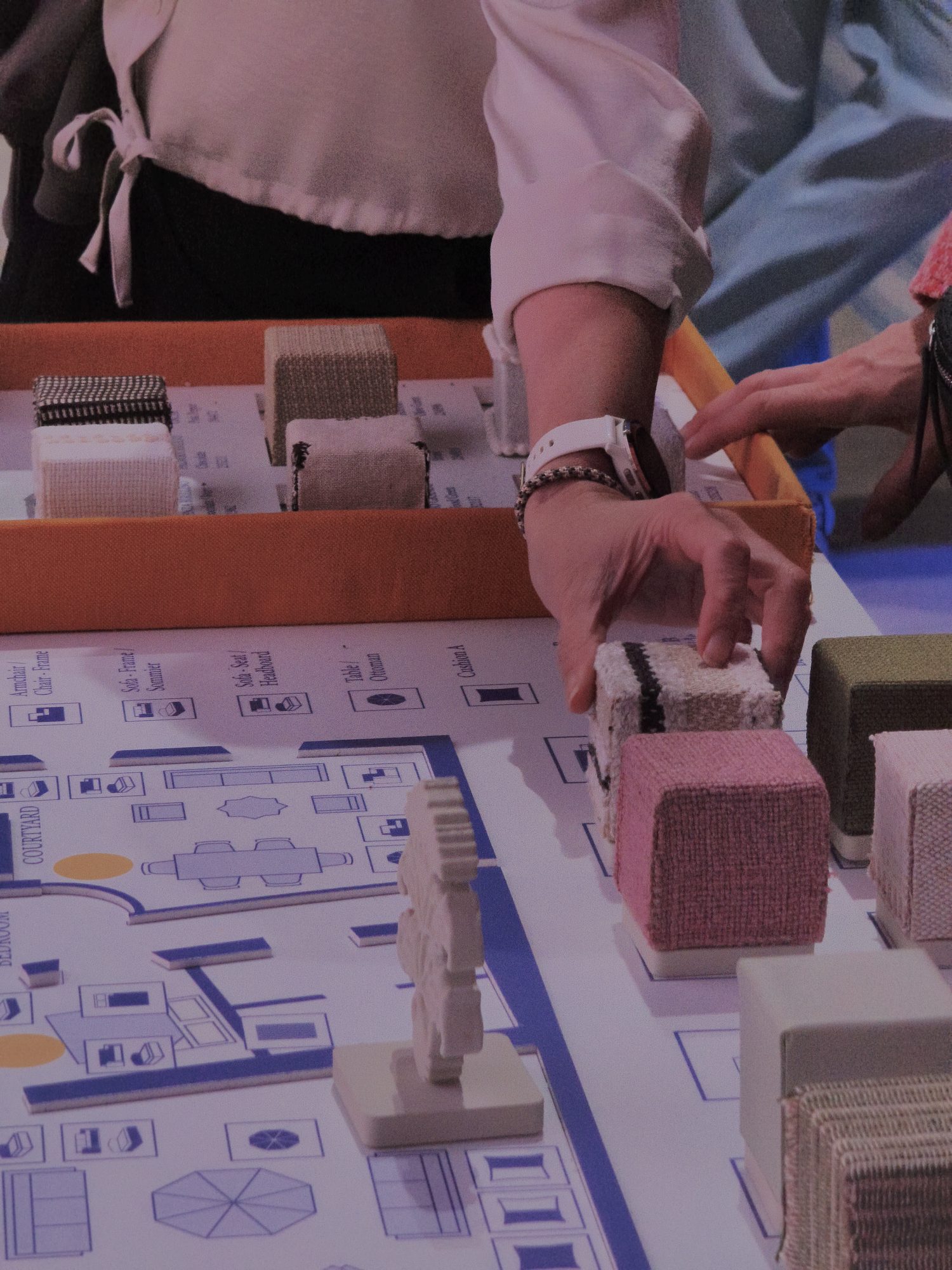
A work surface and a set of objects (cubes, discs, blocks) covered in the material the brand wants to talk about: fabric, stone, leather, wood, ceramics. Inside each object is an invisible marker that identifies it. The visitor picks one up, sets it on an area of the table, and a 3D scene on a LED wall, screen or projection responds at once: a surface changes material, a variant switches on, a detail opens up.
People go back to choosing with their hands. The technology stays out of sight.
The case: C&C Milano at Milan Design Week 2026
For C&C Milano's The Tactile Atelier at Superstudio Più we built a Phygimat with cubes covered in the atelier's fabrics. The visitor placed a cube on the "wall", "sofa", "curtain" or "cushion" slot and the apartment at via Brera 7, rebuilt in photorealistic 3D on the LED wall behind them, changed instantly.
Who it is for
Material brands (fabrics, finishes, leathers, woods, ceramics, paints) that need to show real combinations and applications rather than a flat swatch book. Permanent showrooms, where the configurator answers the repetitive questions and leaves the interesting ones to the salesperson. Trade show stands that want an activation people photograph. Museums and exhibitions where a physical object opens a digital layer. Product launches where the configuration is the message.
What changes from one project to the next
The table is a product. For a new project we design the physical tokens (shape, finish, the brand's materials), map fabrics and surfaces to the configuration logic, build the 3D scene of the space and choose the output (LED wall, screen, projection).
The rest is already done: reading electronics, runtime application, interaction framework, rendering integration. Less than 50 milliseconds pass between the cube touching the table and the change on the LED wall, which to the viewer is "instant". The runtime does not need internet and the setup goes up in a day.
Why it works
There is no interface to learn, feedback is immediate, and several people can compose together. The visitor touches the material before seeing it applied, and that changes how they judge it: they are designing, not watching a demo. Real-time lighting does the rest, and the fabric on the cube and the fabric on the LED wall look like the same object.
Get in touch
Do you have a material brand, a showroom, a trade show or a product launch where touch can drive the digital? Tell us about the project.